
warp and weft
How the practice of weaving is integrated into an understanding of community, cloth and their intertwining relationship.
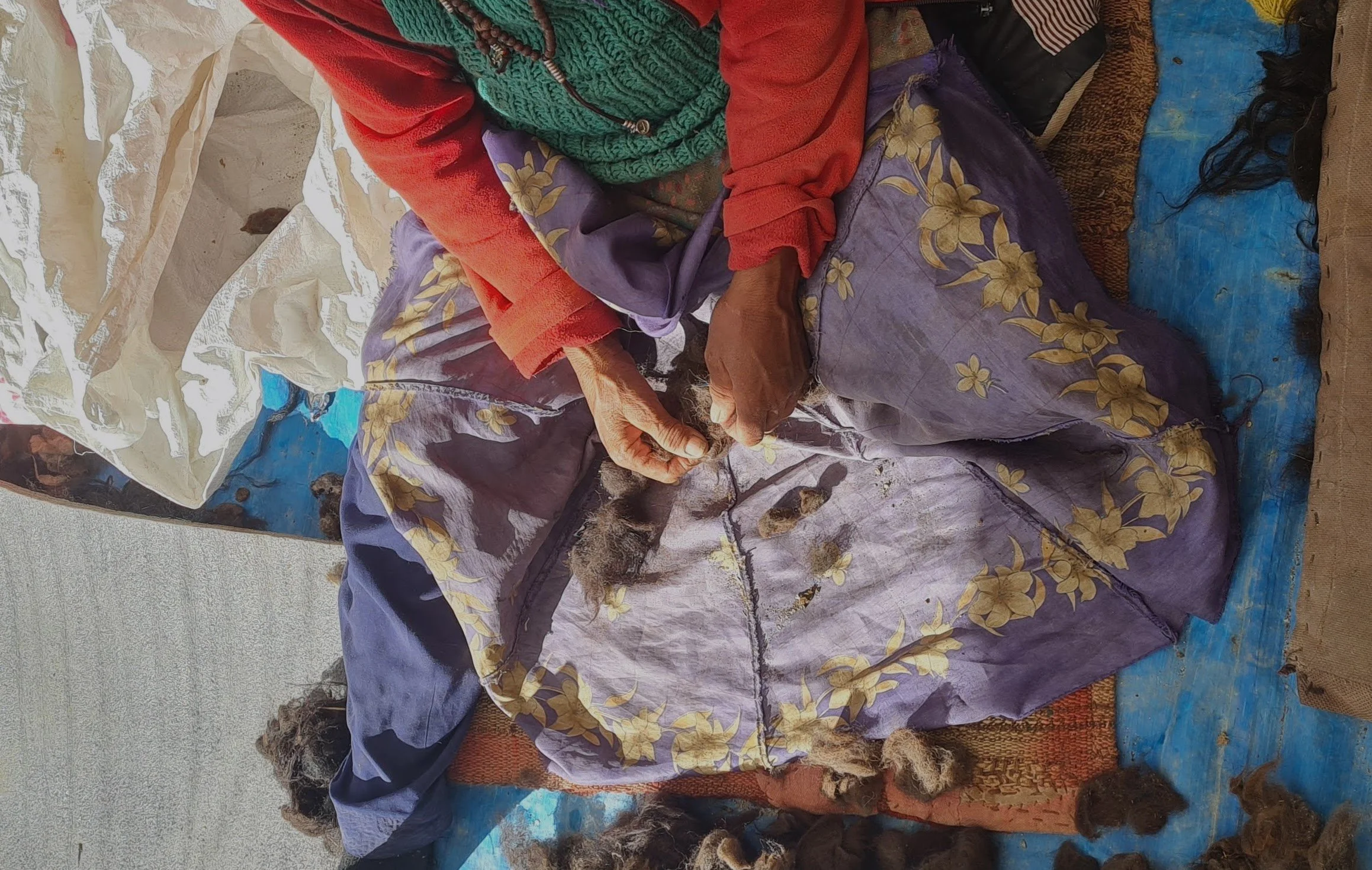
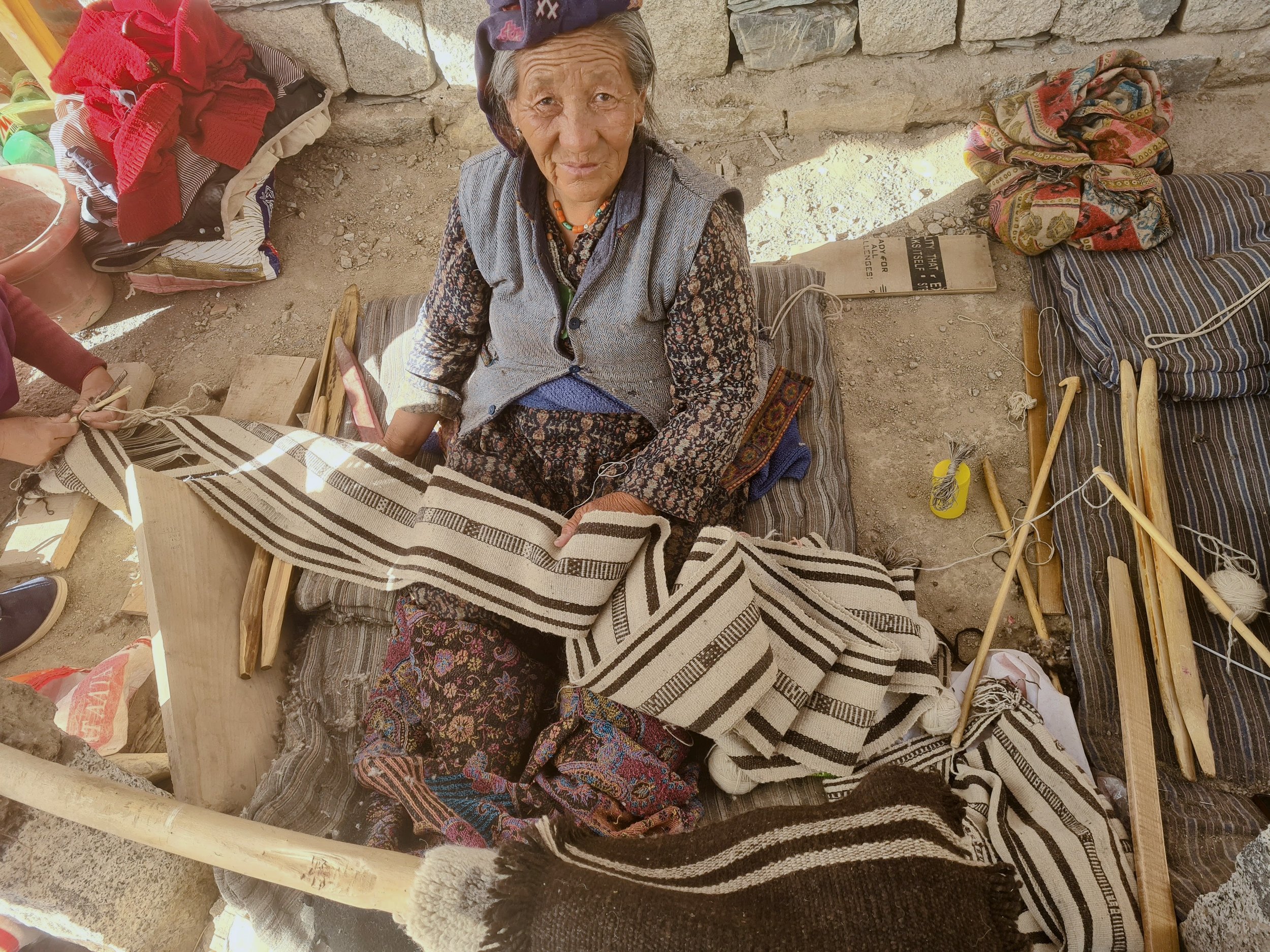
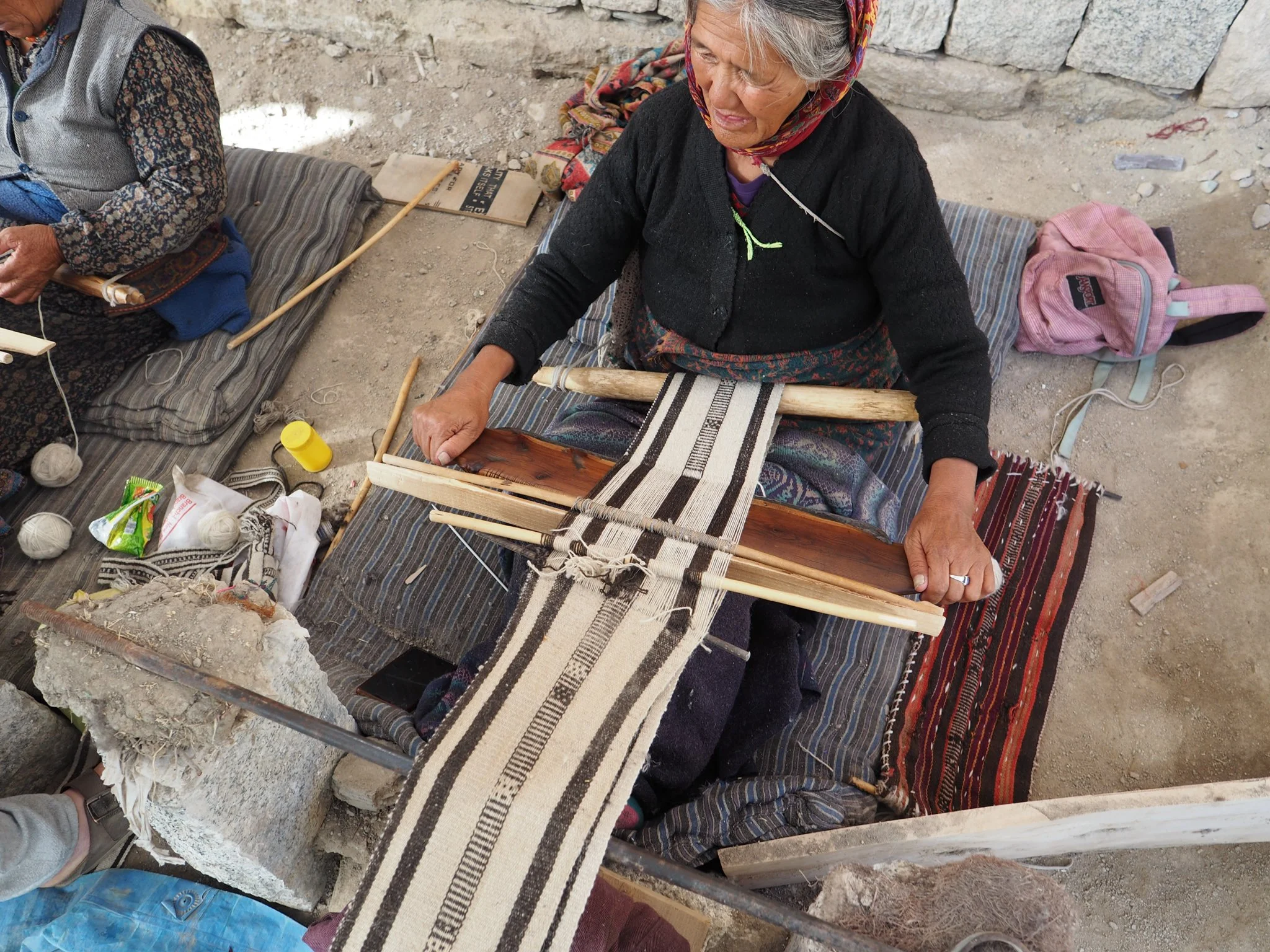
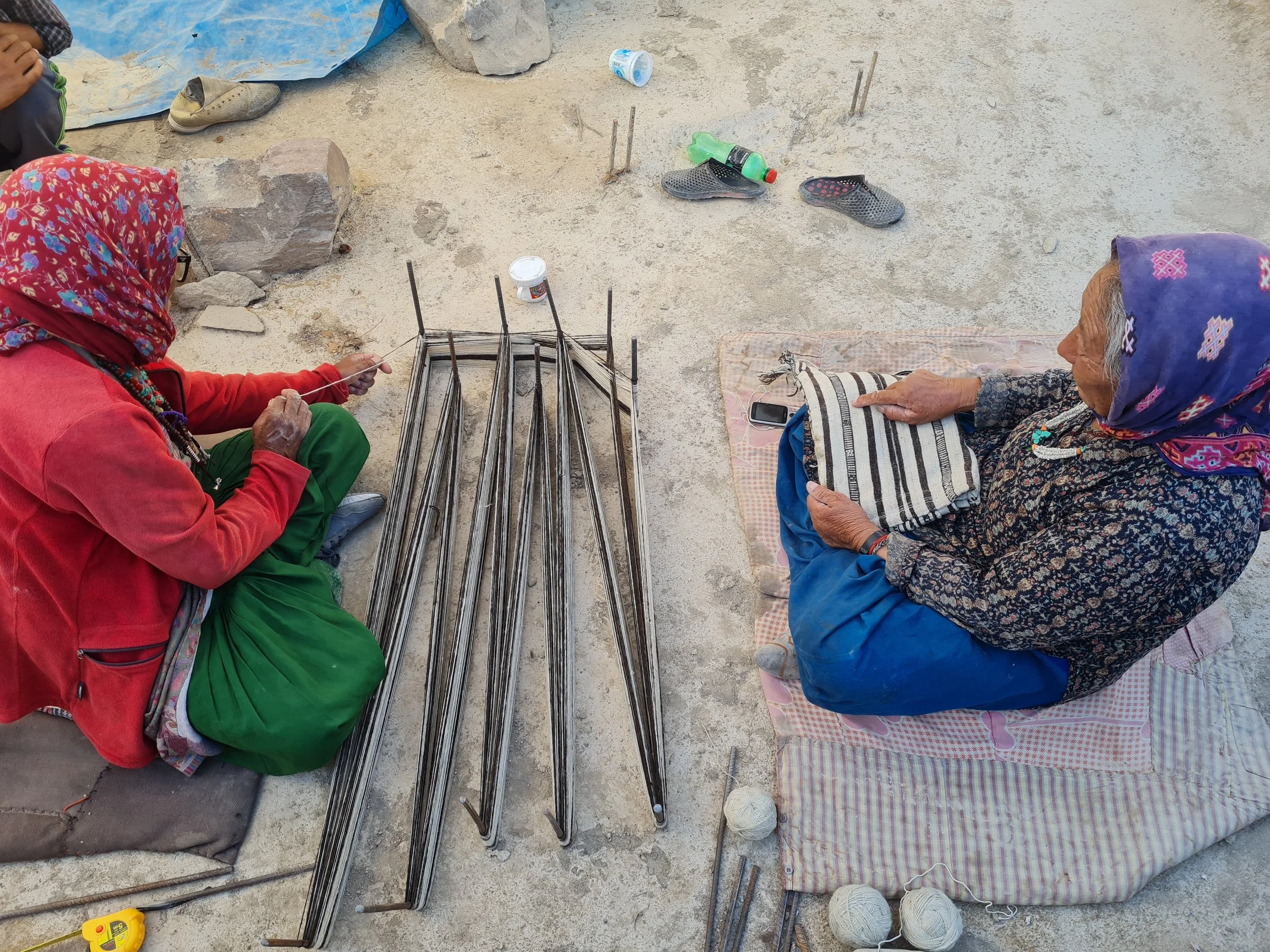
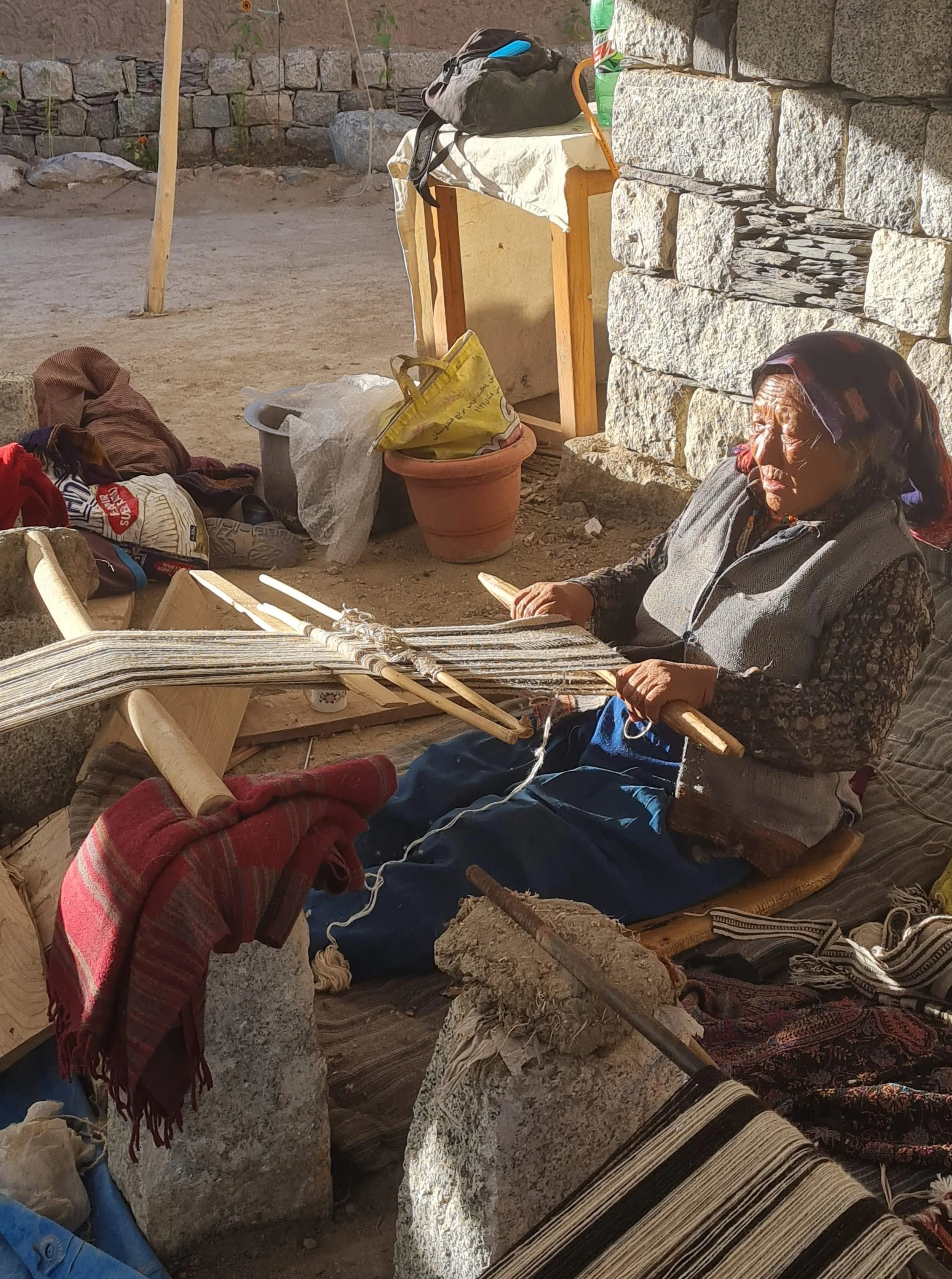
The backstrap loom is the most common form of weaving for the women of Ladakh and holds a deeply symbolic significance in their understanding of relationally within their culture.
It is easy to get lost in the rhythmic back and forth of the weft thread, as it moves through alternating tunnels of warp, lifted with a light wooden branch. With each passage, the threads feel more familiar and the mind is freed to wander. Being quite literally bound to ones practice leaves little room for restlessness and even less for distraction, especially when a single missed thread will affect the integrity of the whole piece.
Backstrap loom is practiced in Ladakh and mainland India, as well other parts of Asia, Africa and the more southern Americas. It is quickly being replaced with larger and more industrial looms, yet holds a singularity through its special, organic nature.
Beyond the physical creation of cloth, weaving is a practice that connects us to our ancestors and to ancient cultures all across the world. It is more than a machine that has now been replaced with something more efficient, but it is a method of meditation and meaning-making that is invaluable. It enables a deeper understanding of the material and an active involvement in its transformation that is empowering as well as political.
Discover the handwoven pieces of We are Kal by the Karnak women here ~